Jun 15, 2026
Uncontrolled Rework in Manufacturing: How It Breaks Traceability, Quality, and WIP Visibility

Rework is part of manufacturing. A failed inspection, an out-of-spec test result, a damaged component, or an assembly issue can all require additional work before a product can move forward.
The problem is not rework itself. The problem is when rework occurs outside the controlled manufacturing execution process.
In many plants, rework is still managed through informal processes:
A technician fixes an issue without updating the routing.
A component is swapped without recording the change.
A failed test is repeated until it passes.
A machine parameter is adjusted without documentation.
The product may ultimately meet requirements, but the production record no longer reflects how it was built. When that happens, traceability, genealogy, quality evidence, WIP visibility, and audit readiness begin to suffer.
Why Rework Needs to Be Part of Execution
Manufacturing execution is responsible for documenting how production actually occurred.
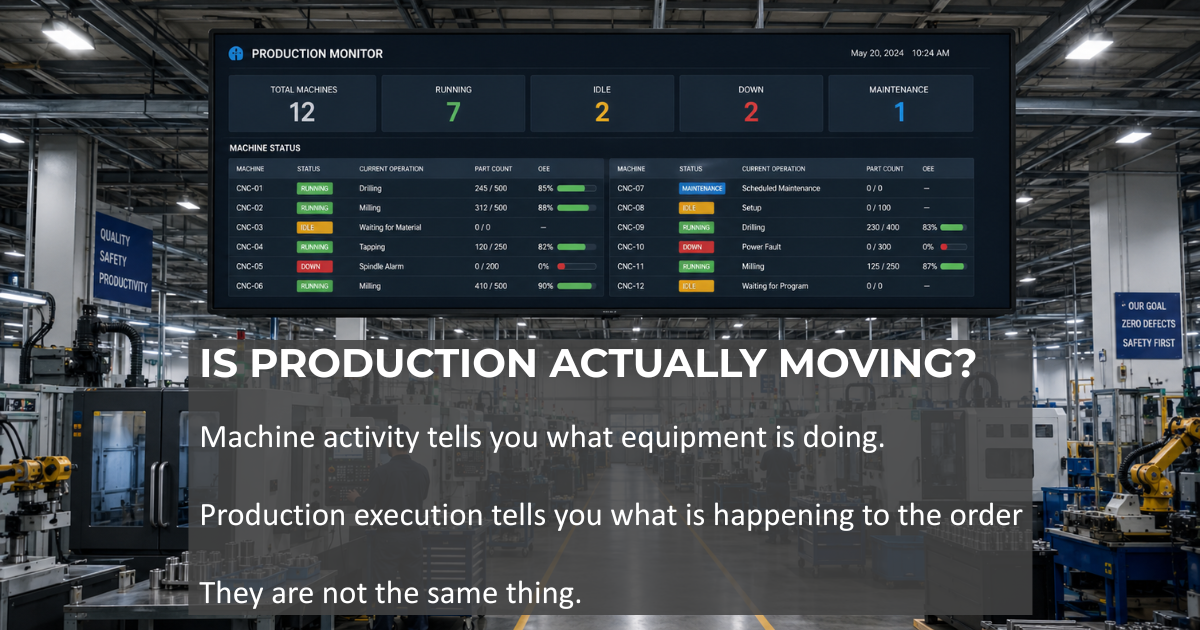
ERP systems define what should be built and when. Manufacturing execution systems (MES) capture what happened, including routing progression, operator actions, material consumption, inspections, test results, and process history.
When rework occurs outside that controlled execution layer, manufacturers lose visibility into the events that shaped the final product. The result is an incomplete execution record that creates risk for quality, operations, engineering, and compliance teams.
Informal Repairs Create Audit Trail Gaps
One of the most common forms of uncontrolled rework is informal repair.
A defect is discovered. A technician makes a correction. Production continues.
No rework transaction is created. No workflow is followed. No evidence is captured.
Examples include:
Replacing a damaged connector
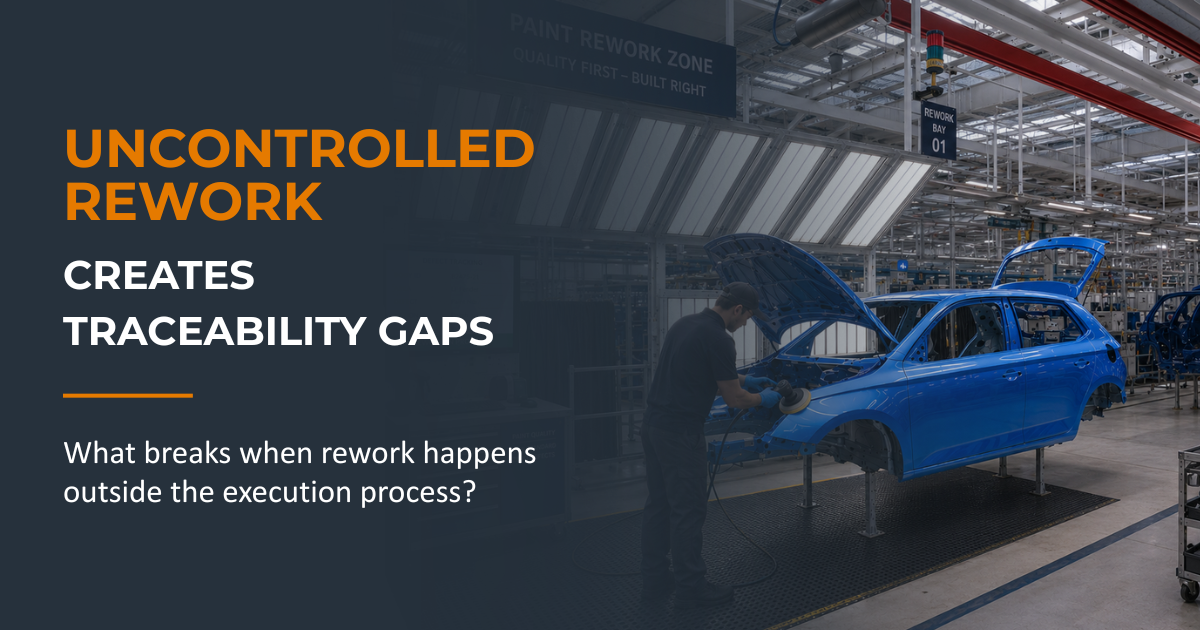
Reworking paint on a body panel
Correcting an assembly error
Adjusting a mechanical fit issue
While the immediate problem may be resolved, important information is lost:
What defect was found?
Who performed the repair?
What procedure was followed?
Was verification completed?
When did the repair occur?
When those details exist only in operator notes, emails, or verbal communication, the audit trail becomes difficult to trust.
Repeated Process Steps Become Invisible
Many rework scenarios involve repeating a process step.
A unit fails a test. An adjustment is made. The unit returns to the same station and is tested again.
If the repeat operation is not executed through a controlled workflow, the production record often shows only the final passing result. Quality teams lose visibility into the original failure, the corrective action that was taken, and the number of attempts required to achieve an acceptable result.
This makes it more difficult to:
Identify process instability
Detect recurring quality issues
Perform root-cause analysis
Understand true production performance
A passing result is valuable, but so is understanding how the product reached that outcome.
Swapped Components Break Genealogy
Product genealogy depends on accurate material tracking.
Manufacturers need to know exactly which components and lots were used in each finished product.
Consider a serialized component that fails inspection and must be replaced. If the replacement is not recorded:
The as-built record becomes inaccurate
Product genealogy is compromised
Supplier investigations become more difficult
Recall scope increases unnecessarily
If a supplier later identifies a suspect lot, manufacturers need to quickly determine which finished products contain affected material. Without accurate genealogy, containment efforts become broader, slower, and more expensive than necessary.
Quality Retests Without History Create Blind Spots
Retesting after rework is often required.
A unit fails inspection, corrective action is performed, the inspection is repeated, and the final result passes.
If only the passing result is retained, the organization loses a critical part of the product's quality history. There is no longer a complete record of the events that led to product acceptance.
This affects:
Audit readiness
Customer investigations
Corrective action programs
Process capability analysis
Continuous improvement efforts
Quality evidence should capture the entire sequence of events, not just the final outcome.
Undocumented Parameter Changes Create Risk
Not all rework involves replacing components.
Many rework activities involve changing process parameters such as torque values, welding settings, test limits, or machine configurations.
When these changes occur outside a controlled workflow, manufacturers lose visibility into the actual conditions under which the product was built.
Later, engineering teams may struggle to determine:
Which settings were used
Who approved the change
Which products were affected
Whether verification occurred afterward
Without documented process history, identifying relationships between process conditions and product performance becomes significantly more difficult.
ERP Status No Longer Matches Shop Floor Reality
Another common consequence of uncontrolled rework is status drift between ERP and production.
The ERP system may indicate that a unit is complete, available, or ready to ship while the product is still in rework, awaiting inspection, waiting for retest, or held for quality review.
This disconnect creates problems such as:
Inaccurate WIP visibility
Inventory discrepancies
Production reporting errors
Scheduling confusion
Delivery risk
Many plants eventually encounter the same issue: the ERP shows the order as complete while work is still being performed on the product.
When execution and status management are disconnected, operational visibility becomes less reliable.
The Impact on Traceability and Containment
Traceability is built through consistent execution and event capture as production occurs.
When rework bypasses the execution process, manufacturers lose the ability to answer important questions:
Which units were reworked?
Which components were replaced?
Which tests failed before passing?
Which process parameters changed?
Who approved the corrective action?
These questions become critical during customer complaints, warranty investigations, supplier quality events, regulatory audits, and product recalls.
Without accurate execution data, quality teams often spend days gathering information from spreadsheets, paper records, emails, and operator notes to reconstruct what happened.
What Execution-Controlled Rework Looks Like
Controlled rework means applying the same execution discipline to rework activities that already exists for production operations.
A controlled approach typically includes:
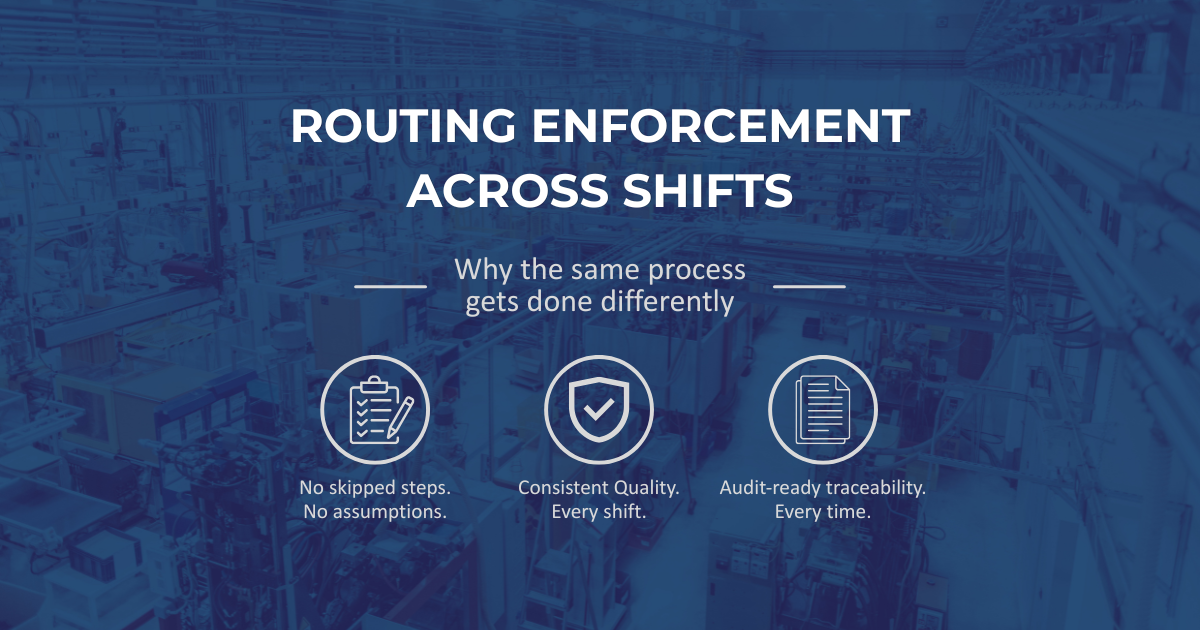
Enforced Rework Routing
Products move through approved rework workflows where required steps, inspections, and approvals cannot be skipped.Captured Production Events
Every rework activity becomes part of the product history, including defect identification, repair actions, material substitutions, retests, and final disposition decisions.Embedded Quality Evidence
Inspection results, measurements, approvals, and verification records remain tied directly to the affected product.Preserved Genealogy
When materials or components are replaced, genealogy records are updated so the as-built product record remains accurate.
Rework Should Strengthen the Production Record
Rework is a normal part of manufacturing. The risk emerges when rework activities occur outside the systems and workflows used to control production execution.
When repairs, retests, component swaps, and process adjustments occur outside the execution process, manufacturers create gaps in the production record that often surface later during audits, recalls, customer investigations, warranty analysis, or quality improvement initiatives.
A controlled rework process ensures that repairs, retests, material substitutions, and disposition decisions become part of the permanent production record rather than gaps that must be reconstructed later.
The result is:
Accurate traceability
Preserved genealogy
Reliable WIP visibility
Stronger containment capability
Faster audits
Better quality evidence
Most importantly, manufacturers maintain a complete and defensible record of how production actually occurred.