Quality in Execution vs Separate Systems

Apr 20, 2026

Quality in Execution vs Separate Systems

Scott McCallum headshot

Scott McCallum

Senior MES & Shop Floor Systems Engineer

A common debate when setting up plant floor software is where quality should live. Quality teams often want their own dedicated software, usually because it is built specifically for deep Root Cause Analysis, supplier tracking, and audits. On the flip side, plant managers usually want everything running through the MES to keep operations in one place.

The reality is that either path can work well. The success of a quality system does not depend on which software holds the final data. It depends entirely on how quality is controlled and executed on the plant floor.

Standalone QMS vs Integrated MES Quality modules

The problem with treating quality as a separate silo is that it often becomes an after-the-fact reporting exercise. If an operator has to jump between systems or wait for a quality engineer to review a dashboard, bad parts can keep moving down the line. MITS fixes this by focusing on execution. We believe that no matter what software your quality team uses for their analysis, the actual enforcement of quality rules has to happen at the point of production.

When you use the built-in quality tools in MITS, you get what we call "quality through execution." The quality processes are not just documented; they are built directly into the routing and station workflows. MITS controls the environment naturally, so operators do not have to think about whether a part is allowed to move forward.

This execution-first approach enforces standards right on the line:

  • Dynamic routing physically stops non-conforming parts from advancing to the next station.

  • Inline quality checks require an operator to validate a step before the machine cycle can complete.

  • Automated part history checks verify the full genealogy and test results of a component instantly.

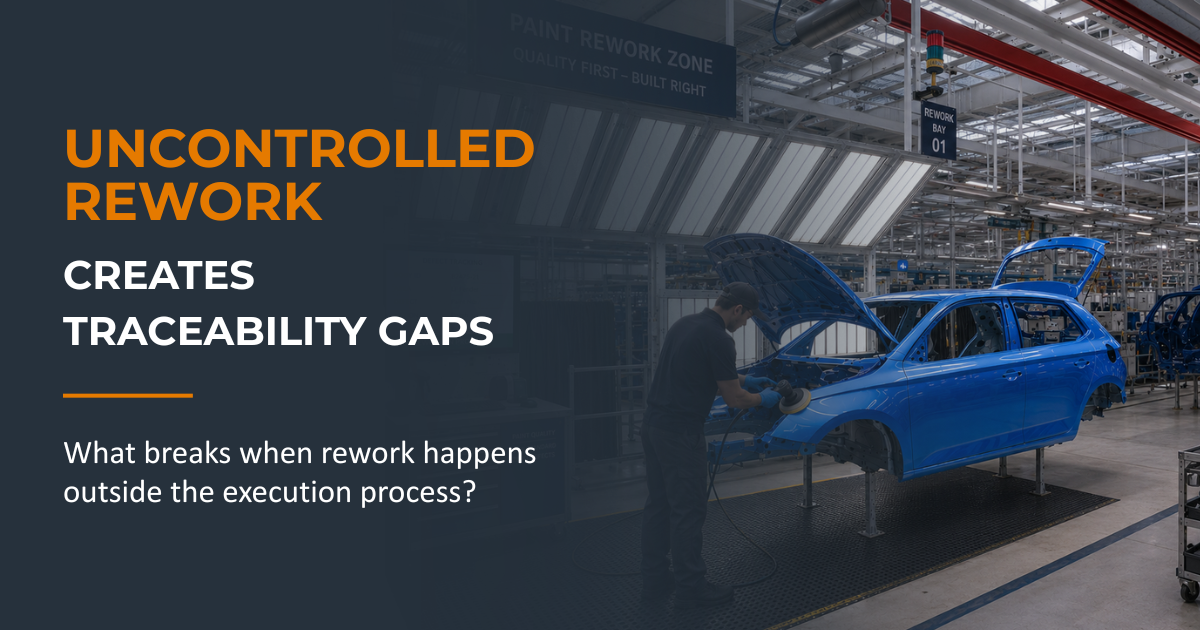
  • Guided rework gives operators the exact, standardized steps they need to salvage a part, right at their station.

But we also know that many quality teams already have software they trust for RCA and compliance. MITS supports that completely. If your team prefers to use a separate quality system, MITS easily connects to it.

In this connected setup, the external system might hold the overarching rules and handle the deep analytics, but the physical execution still happens through MITS. When the external system flags an issue, MITS is the system that actually stops the line, triggers the local quality alerts, forces the documented rework, and generates the process-specific reports.

Whether you use the built-in quality system or connect to a separate one, the goal is the same. Quality cannot just be a report you look at tomorrow. It has to be built into the execution of the work happening today.

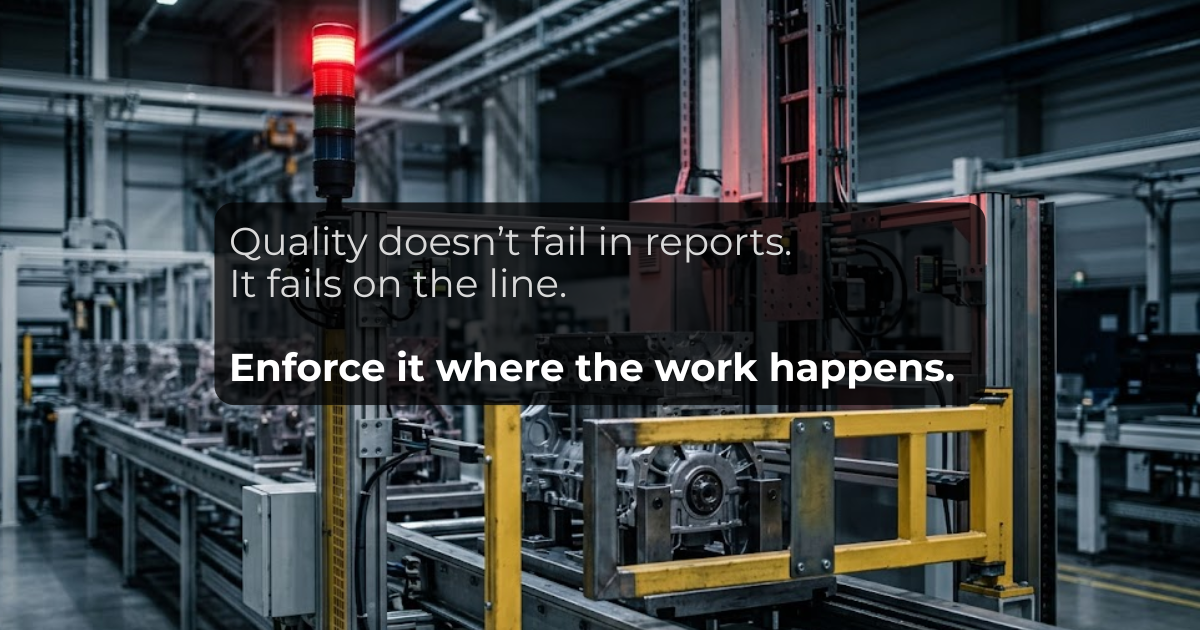
Quality embedded into execution with enforced workflows and inspections

Related posts

View all
Routing Enforcement and Shift Variability in Manufacturing

Apr 27, 2026

Routing Enforcement and Shift Variability in Manufacturing

Scott McCallum headshot

Scott McCallum

Senior MES & Shop Floor Systems Engineer

MITS shifts the burden of process compliance away from the operator and puts it entirely on the system. Instead of guessing or relying on the veteran operator who has been there for twenty years, your team follows clear and guided workflows.

Read blog ->
Why Spreadsheets Last Longer Than They Should in Manufacturing

Mar 26, 2026

Why Spreadsheets Last Longer Than They Should in Manufacturing

Connor Cooper headshot

Connor Cooper

Manufacturing Systems Engineer

Organizations rely on spreadsheets for critical processes, but they introduce inconsistency, weaken traceability, and fail to support controlled execution.

Read blog ->
MES vs. Custom-Built Shop Floor Systems

Mar 04, 2026

MES vs. Custom-Built Shop Floor Systems

Brian Olszewski headshot

Brian Olszewski

MES Engineering Manager

When manufacturers evaluate digital transformation initiatives, one common question emerges: Should we implement a Manufacturing Execution System (MES), or continue expanding our custom-built shop floor software? Both approaches can collect production data and support operations. The real difference lies in long-term risk, scalability, integration capability, and total cost of ownership. If your organization is weighing MES vs. custom systems, here’s what you need to consider.

Read blog ->
Why Traceability Fails During Recalls and Audits

Mar 30, 2026

Why Traceability Fails During Recalls and Audits

Scott McCallum headshot

Scott McCallum

Senior MES & Shop Floor Systems Engineer

Traceability doesn’t fail because data is missing. It fails because data is inconsistent, manual, and disconnected from execution. When recalls or audits happen, teams are forced to reconstruct production history instead of retrieving it.

Read blog ->
Why WIP Visibility Fails Without Execution Control

Apr 06, 2026

Why WIP Visibility Fails Without Execution Control

Brian Olszewski headshot

Brian Olszewski

MES Engineering Manager

Many manufacturers pursue WIP visibility through dashboards or reporting tools, but dashboards can only display the data they receive. Reliable WIP visibility comes from systems that manage how production work actually moves through the plant. When execution is structured, production status becomes accurate and WIP locations become clear.

Read blog ->
Why MES Integration Fails After Go-Live

Apr 13, 2026

Why MES Integration Fails After Go-Live

Carter Valente headshot

Carter Valente

Senior MES & Shop Floor Systems Engineer

Most MES integrations don’t fail at go-live. They fail when the plant changes and systems can’t keep up. This is usually not a tooling issue, but a breakdown in data ownership, integration structure, and change control.

Read blog ->