May 06, 2026
Routing Enforcement and Shift Variability in Manufacturing

In discrete manufacturing, a perfect routing on paper rarely matches what actually happens on the floor. You have probably heard the classic complaint that the third shift just does things differently. When operators are under pressure to hit numbers, or when they have to rely on tribal knowledge and disconnected paper travelers, informal workarounds quickly become the norm. But this is not a people problem. It is an execution control problem. If your system does not actively prevent someone from skipping or reordering steps, the culture of that specific shift will end up dictating how your products are built.
The Cost of Hidden Variations
The consequences of this variability go way beyond minor hiccups on the line. When quality checks become optional under pressure, your plant is going to face serious downstream issues. Common impacts include:
Quality escapes happen when missed inspections allow defective units to move forward.
Expensive rework piles up because problems are discovered way too late in the process.
Massive audit gaps appear since you have no proof that required steps were actually completed.
Traceability breaks down entirely, making it nearly impossible to contain a supplier issue later on.
Why Visibility Falls Short
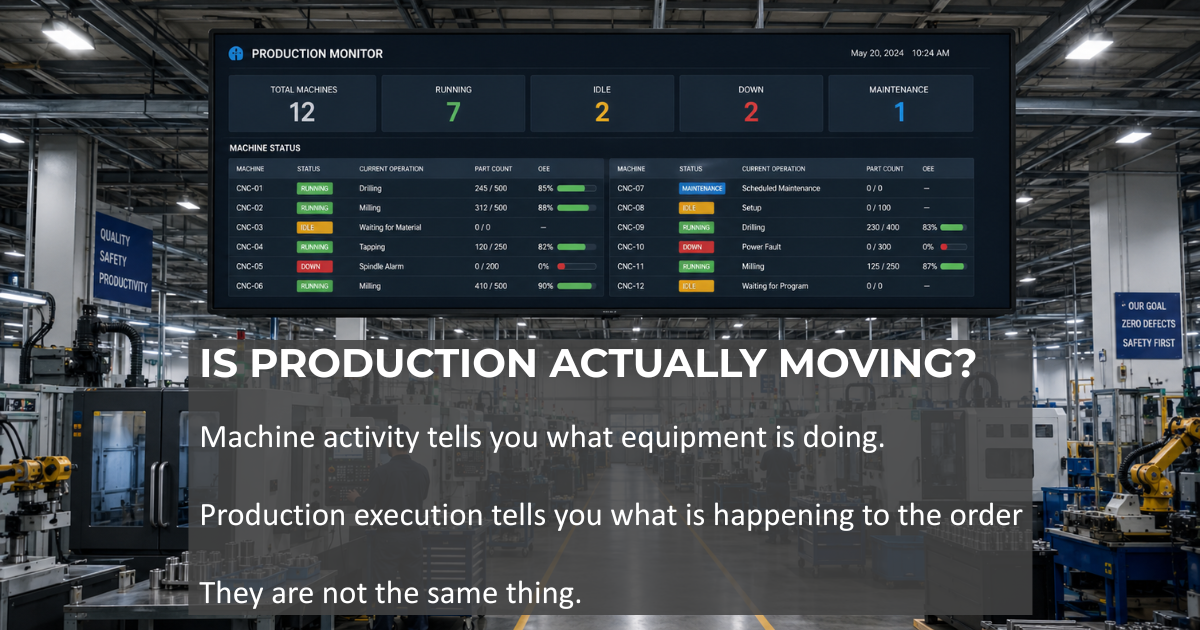
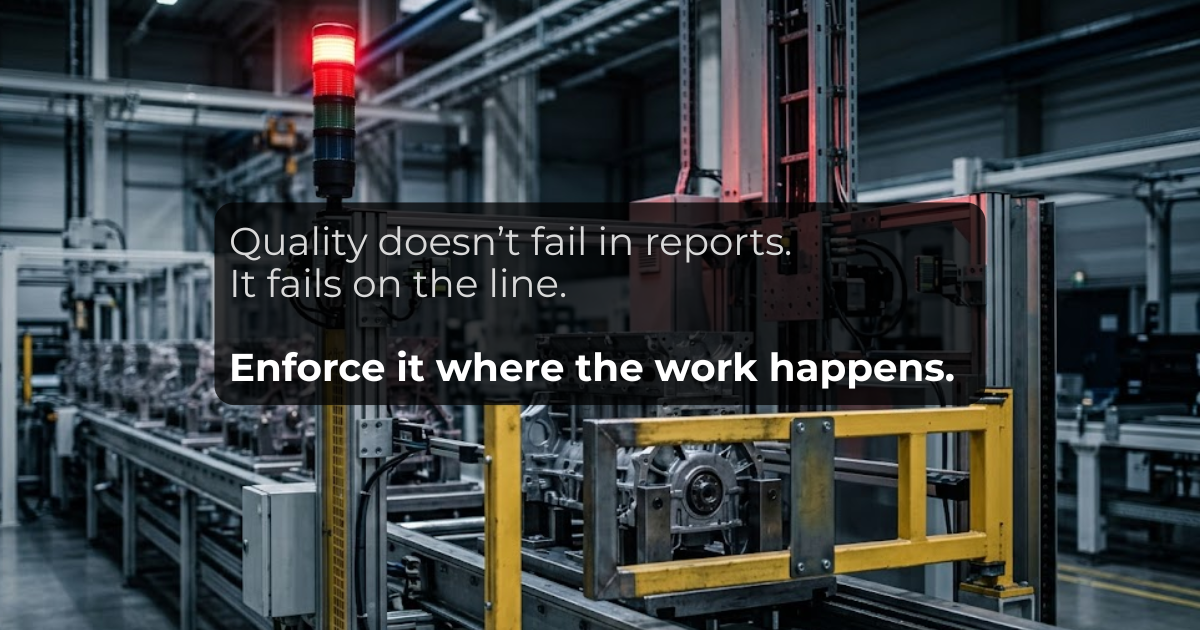
Many plants try to fix this by throwing more reporting tools at the problem. The reality is that visibility alone will not cut it. A sleek dashboard can only tell you what went wrong after the fact. It cannot physically stop an operator from skipping an inspection in real time. Reporting is completely passive. Unless you actively enforce the process exactly where the work is happening, shift to shift variability is never going to go away. To truly standardize production, you have to control the execution rather than just watch it happen.
How MITS Enforces Execution
This is where MITS changes the game for the plant floor. We built MITS around a simple reality for discrete manufacturing environments. When a line is not fully automated, the system must actively guide the human operator. MITS completely controls the execution flow through several key mechanisms:
Strict sequence control guarantees work only happens at the correct station and in the exact right order.
Hard stops physically block an operator from moving forward until they provide the required inputs.
Critical inspection data and process parameters are captured before a order ever leaves the station.
Built In Quality and Rework
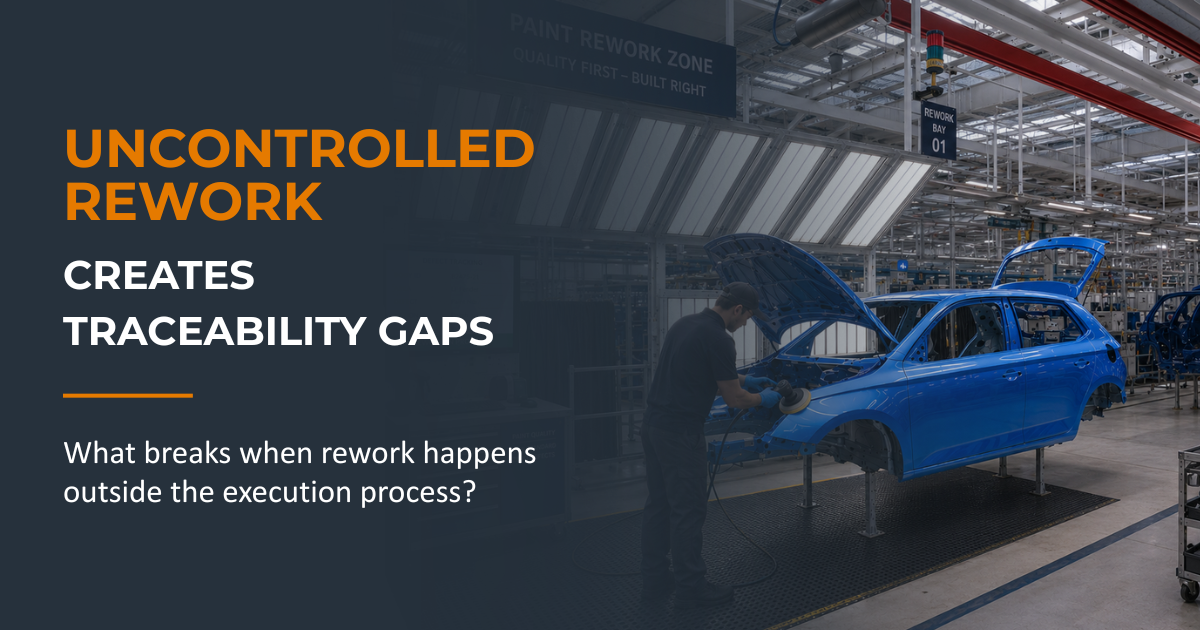
MITS also embeds quality gates directly into the daily workflow. Inspections become an unskippable part of the core process instead of a separate task that is easily forgotten. If a order fails a check, MITS instantly triggers a controlled nonconformance and rework routing. You will not see any more improvised workarounds. Rework follows a strictly defined digital path that ties every single action back to the specific equipment, operator, and timestamp for absolute traceability.
Standardizing Your Plant Floor
Ultimately, MITS shifts the burden of process compliance away from the operator and puts it entirely on the system. Instead of guessing or relying on the veteran operator who has been there for twenty years, your team follows clear and guided workflows. Supervisors can finally spend their time managing flow rather than chasing down exceptions. Best of all, your engineering team gets execution data they can actually trust. By deploying MITS, you can eliminate that frustrating shift to shift variability and turn chaotic production into tightly controlled execution.