Apr 06, 2026
Why WIP Visibility Fails Without Execution Control

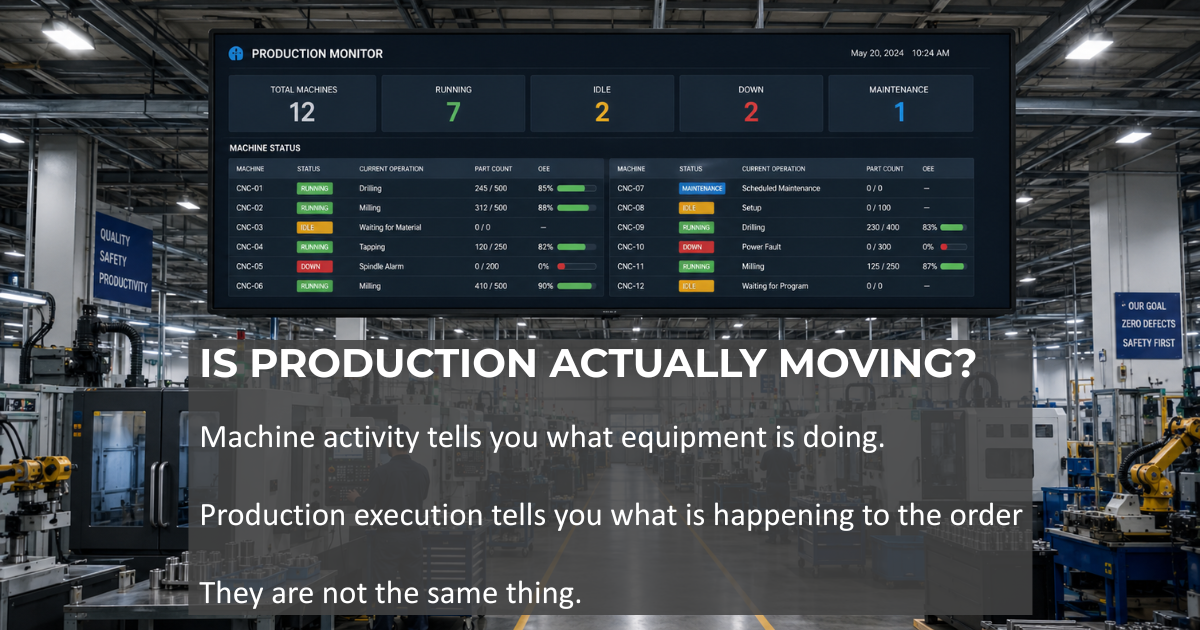
In many manufacturing plans, leaders believe they have visibility into work-in-process (WIP). Your ERP shows the order status, production quantities are logged in spreadsheets, and supervisors are tracking progress using shift reports. On paper, it looks like the operation is visible, but when someone asks – “Where is the order right now?” – the answer is often unclear. The problem isn’t reporting. The problem is how production execution is managed on the shop floor.
The Gap Between ERP Status and Shop Floor Reality
ERP systems are designed for planning and transactions. They manage your orders, your inventory, and financial transactions. What they do not manage is how work actually moves through production processes. A typical ERP might show that an order was released or that it is in production, but these statuses rarely reflect what is happening on the shop floor in real time. In many plants, once an order is released, it remains “in production” for hours or days until someone manually updates the system. During production an order might be sitting in rework or blocked by missing components. From an ERP perspective, both of these situations look identical.
Why Spreadsheet-based WIP Tracking Breaks Down
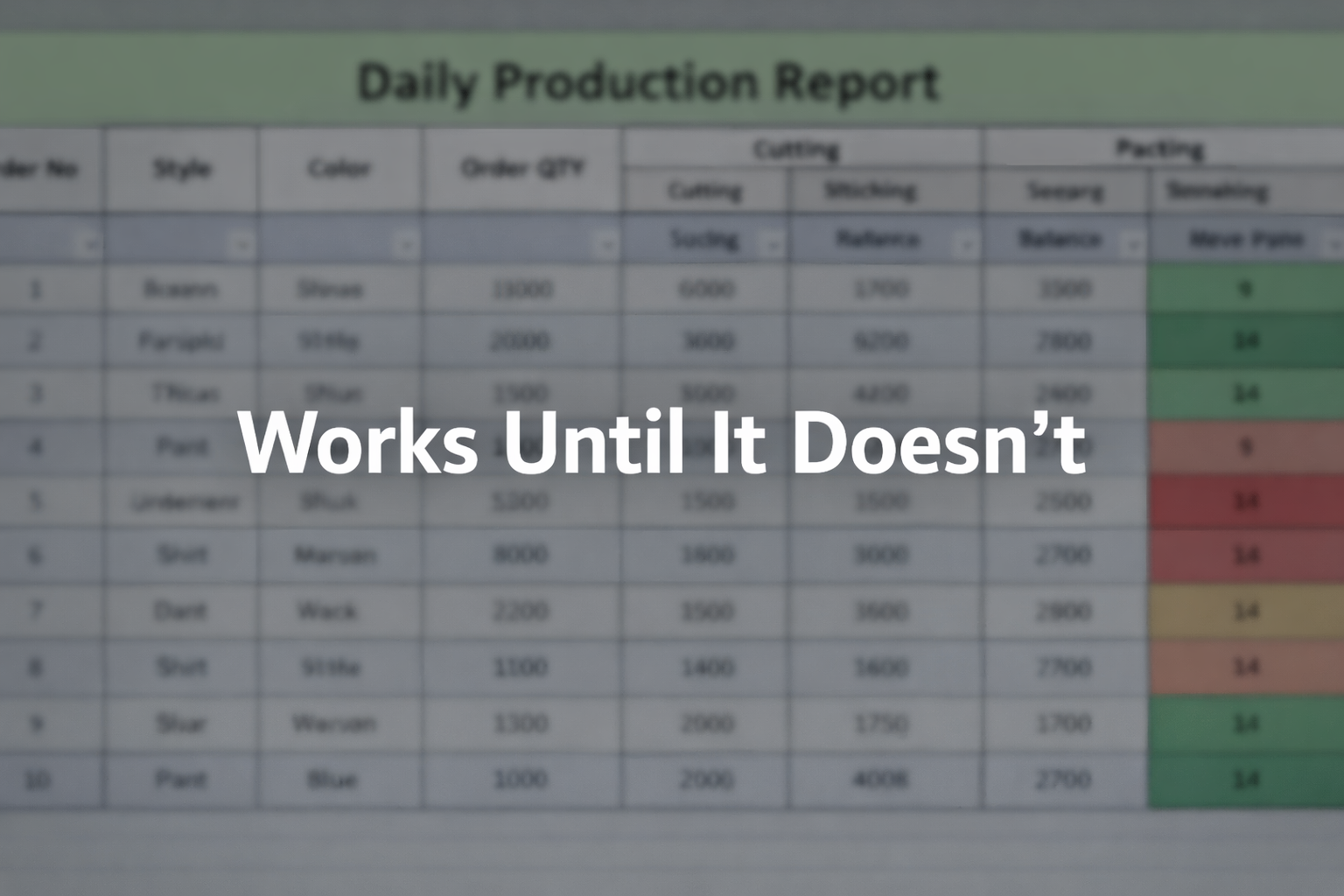
Many plants attempt to fill the visibility gap using spreadsheets or whiteboards out on the shop floor. It is then up to operators or supervisors to update these tools with quantities produced, job status, or workstation progress. This process is reliant on someone updating a file which leads to delayed visibility. By the time the data appears in the spreadsheet, the actual production situation has already changed.
Orders become invisible between operations because spreadsheets typically record output quantities, not process events. This means there is no clear record of where a job currently is in the routing. If an order has finished operation 30 but has not yet started operation 40, its status is often unclear. That job simply disappears into WIP.
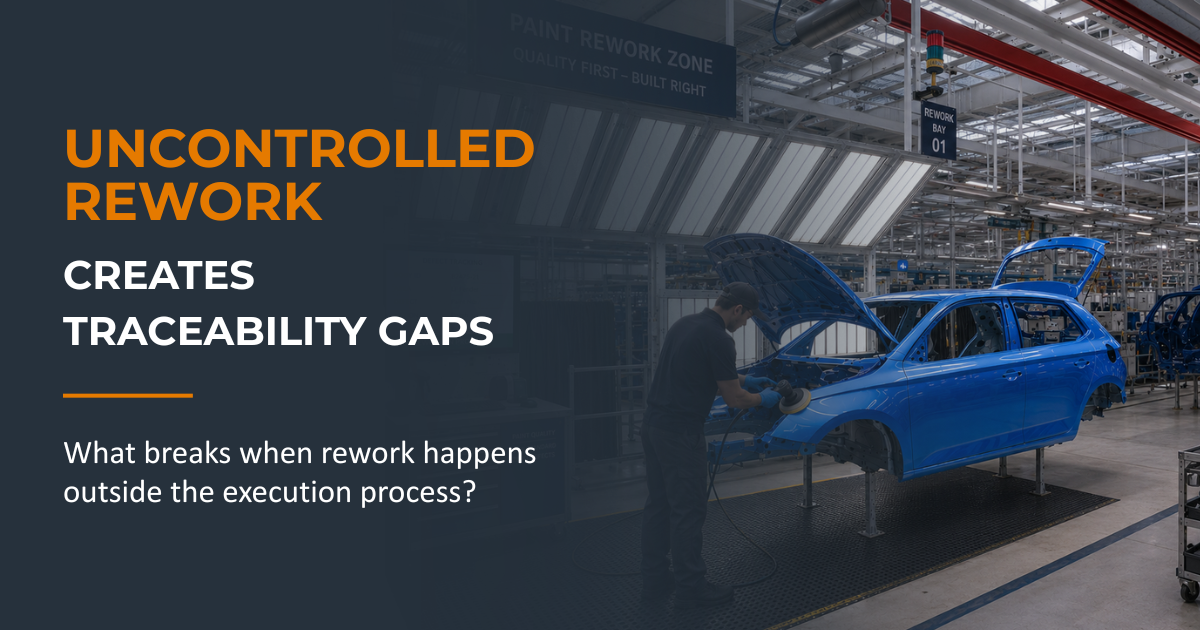
Almost every plant has experienced this scenario: An order was supposed to finish yesterday. ERP still shows that it is in production. No one is sure if its waiting at a station, already completed, or sitting in a rework area. Someone eventually walks the floor to find it. This is not a visibility system – it’s a manual investigation.
The Role of Execution in WIP Visibility
True WIP visibility does not come from reports. It comes from capturing production execution events as work happens. This is where a Manufacturing Execution System (MES) changes how production data is managed. Instead of relying on manual updates, the MES records each step of the process. These events create a live record of production flow.
Routing Enforcement Creates Reliable Status
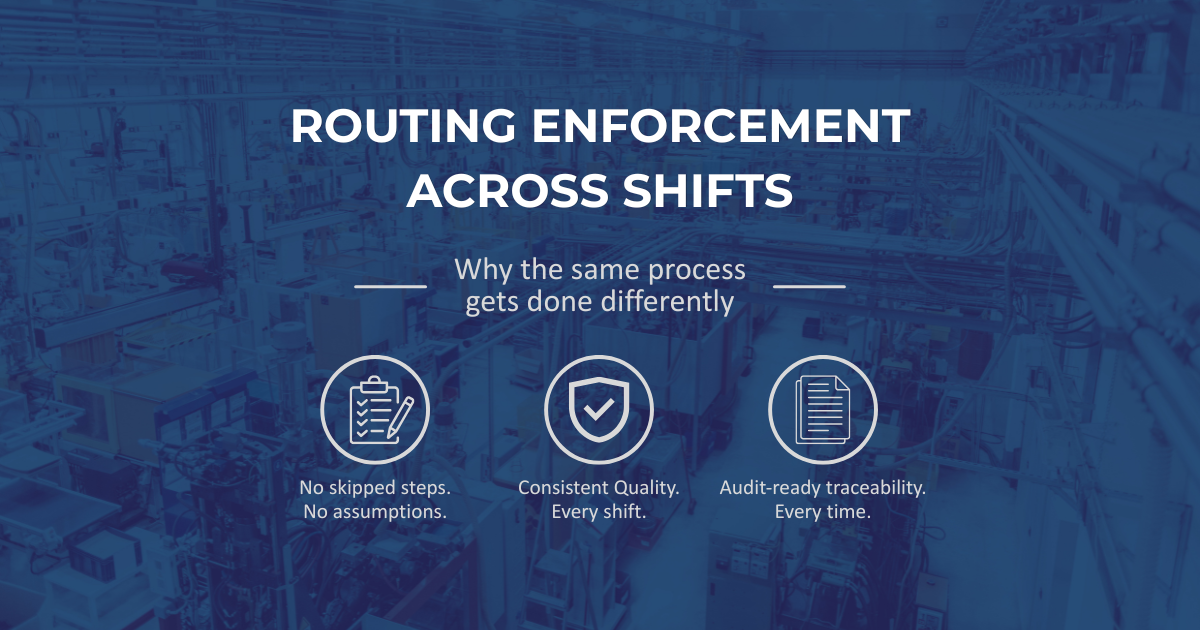
One of the most important capabilities of an MES is routing enforcement. In many manual systems, operators move jobs through production without confirming that previous steps were completed. This leads to gaps in production history and inaccurate WIP tracking. When MES provides routing enforcement, the required data must be recorded before a job moves forward and quality checks can be enforced at specific steps.
This structure ensures that production events are recorded consistently. As a result, the system always knows which operation a job is currently at, which operations are complete, and which jobs are waiting or blocked. Instead of a generic “in production” status, the system provides precise execution data.
A Real-World Example
Consider a plant assembling complex mechanical products across multiple workstations. Without structured execution tracking, ERP shows 50 orders in production and supervisors are tracking progress in spreadsheets. By mid-shift, several problems appear: two orders are stuck waiting for a missing component and another job finished but was never reported.
From a reporting perspective, everything still appears in production. With an MES controlling execution, you have each operation start and completion recorded, and supervisors can see where each order is located. The difference is not simply better reporting. It is structured execution data that reflects reality on the shop floor.
Visibility Is a Result of Execution
Many manufacturers pursue WIP visibility through dashboards or reporting tools. But dashboards can only display the data they receive. If production events are not captured consistently, visibility will always be incomplete.
Reliable WIP visibility comes from systems that manage how production work actually moves through the plant. When execution is structured, production status becomes accurate and WIP locations become clear. Most importantly, plant teams spend less time searching for orders and more time improving production flow.
Learn More About Production Execution in MITS
WIP visibility is ultimately a result of structured production execution. MITS managed routing, operator workflows, and production events to provide real-time visibility across the shop floor. Learn how MITS supports production execution and WIP management.
Explore the Production Management capabilities of MITS here