Jun 25, 2026
Machine State vs. Production Execution Status: Why Running Machines Doesn't Always Mean Production Is Progressing

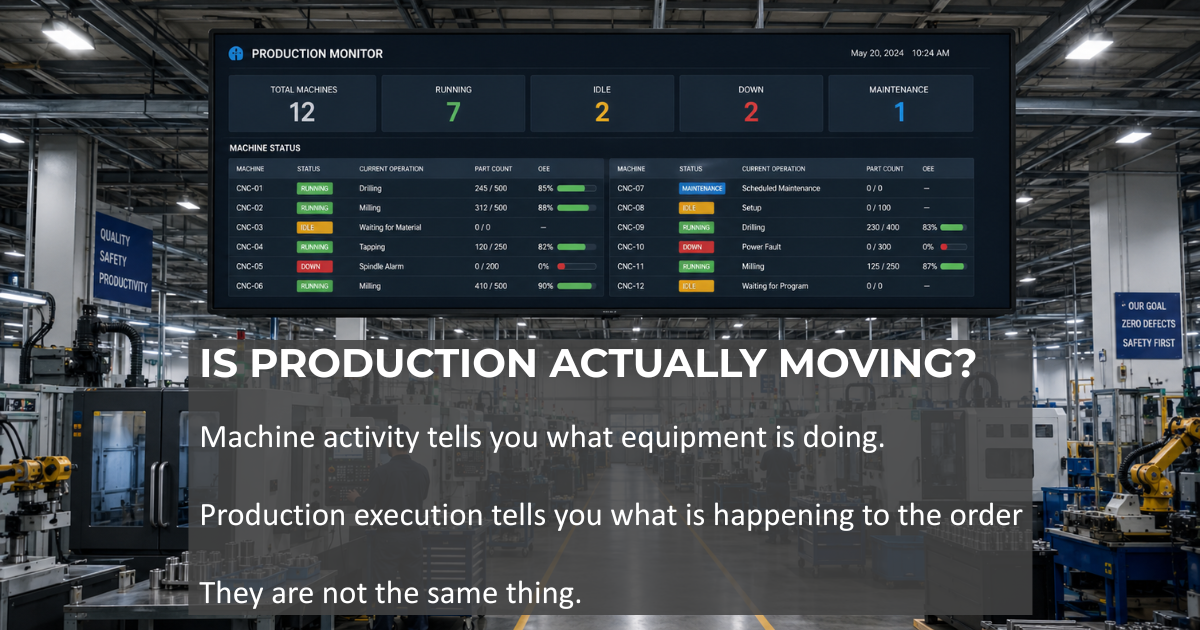
Walk through almost any manufacturing facility and you'll find machine data everywhere. Machines report running, idle, faulted, blocked, or starved states. Dashboards show uptime percentages. Operators can see whether equipment is cycling or stopped.
But one of the most common sources of confusion in manufacturing operations is assuming that machine state equals production progress. It does not.
A machine can be running while an order is effectively stalled. A station can complete cycles while a unit remains on quality hold. Equipment can produce activity while production execution falls further behind reality.
Understanding the difference between machine state and production execution status is critical for accurate WIP visibility, traceability, and operational control.
What Machine State Actually Tells You
Machine state describes equipment behavior.
Examples include:
Running
Idle
Faulted
Starved
Blocked
Setup or changeover
These states are valuable because they help operations and maintenance teams understand equipment utilization and downtime.
They answer questions such as:
Is the machine currently cycling?
Is the machine waiting for material?
Did a fault stop production?
How much time was spent running versus down?
What machine state does not tell you is whether production requirements have been satisfied. A running machine can still be processing the wrong product, operating outside the approved workflow, or producing parts that cannot advance to the next step.
What Production Execution Status Tells You
Production execution status describes where an order, unit, lot, or serial number actually stands within the manufacturing process.
It answers questions such as:
Where is this order right now?
Which routing steps have been completed?
Has required quality verification occurred?
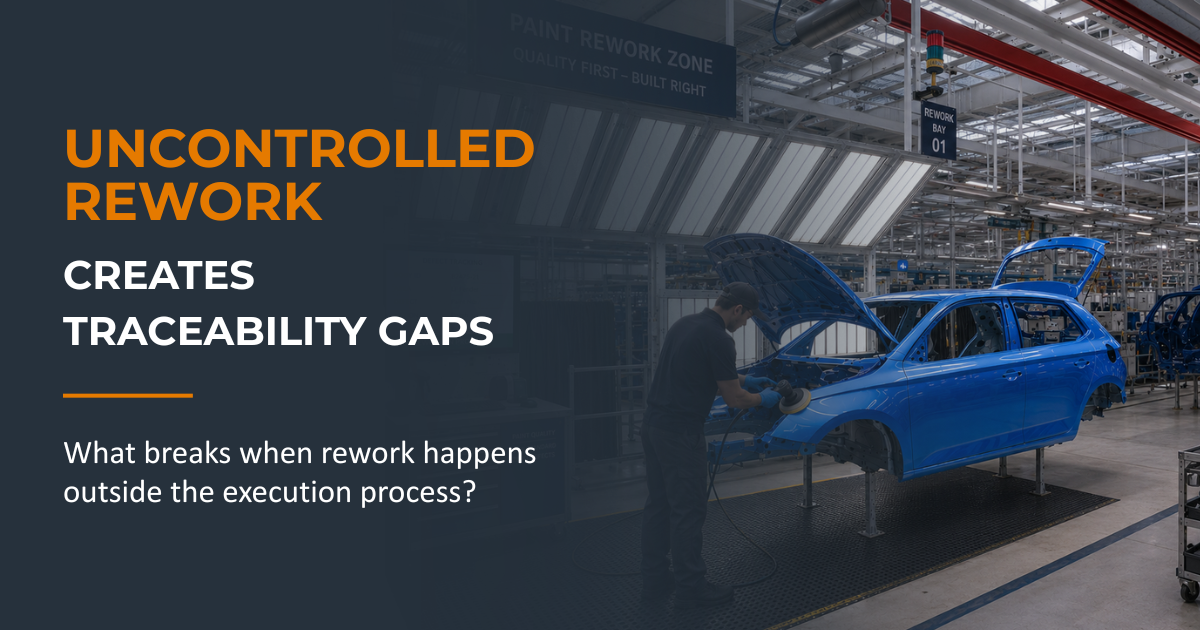
Is the unit in rework?
Is production waiting for approval?
Can the order move to the next station?
This information cannot be determined from machine signals alone. It requires a structured execution record that captures what happened, when it happened, where it happened, and whether the required process conditions were satisfied.
Example 1: The Wrong Part Is Loaded
A machine may be running normally. Cycle times look good. Equipment utilization appears healthy. However, an operator accidentally loads the wrong component lot or incorrect part revision.
From the machine's perspective, everything is functioning correctly. From a production execution perspective, the order cannot legitimately advance because the build no longer matches the approved process.
The machine state says "running." The execution status says "exception requiring investigation." Without execution tracking, both situations appear identical on a dashboard.
Example 2: A Required Step Is Skipped
Consider a routing with multiple stations:
Assembly
Torque verification
Vision inspection
Packaging
If a unit bypasses torque verification and proceeds directly to packaging, machines may continue operating normally. Production output may even increase temporarily. However, the order has not completed its required routing.
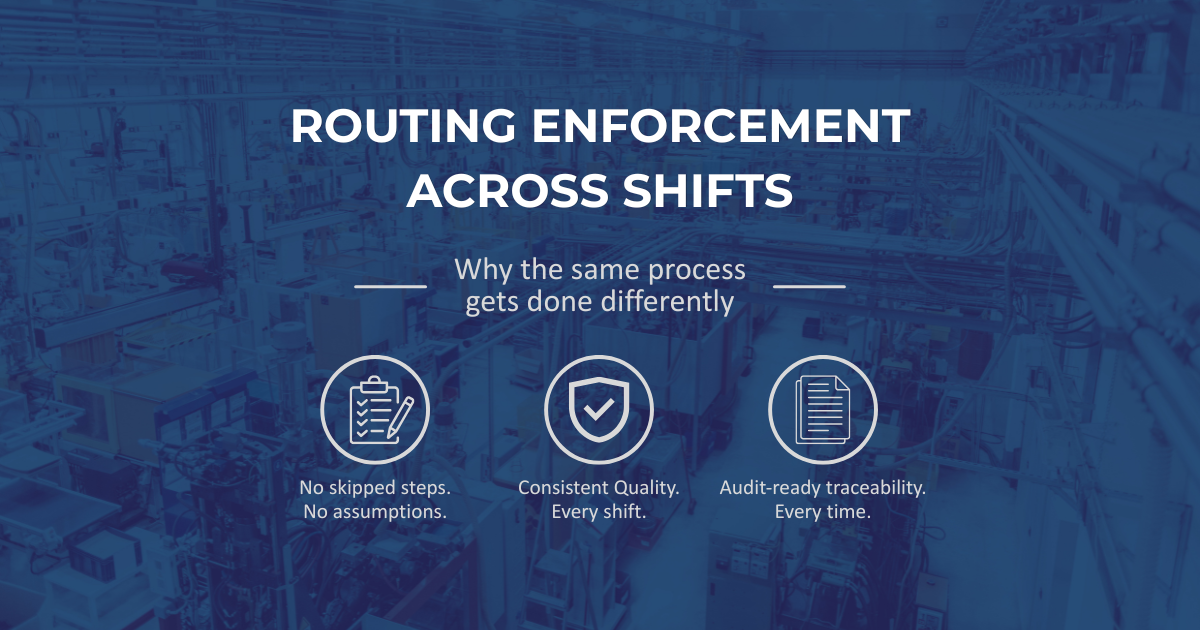
This is where route enforcement becomes important. Production progress should be based on completion of required workflow steps, not simply machine activity. A running machine does not prove that production execution occurred correctly.
Example 3: Quality Hold Stops Advancement
Imagine a unit fails inspection. The quality system places it on hold pending review. Meanwhile, upstream machines continue producing additional units. Machine dashboards show activity. Orders continue entering the line. Yet the affected unit cannot advance.
For plant managers trying to answer "Where is this order right now?", machine state provides no meaningful answer. The execution status must include the quality state of the unit.
Without quality status integrated into production execution, WIP visibility becomes inaccurate and containment becomes difficult.
Why Order Status Often Drifts from Reality
Many manufacturers maintain order status using a combination of:
ERP transactions
Spreadsheets
Paper travelers
Operator notes
Machine dashboards
Over time, these systems begin to disagree. ERP may show an order as complete. Production may believe it is still in process. Quality may have it on hold. Engineering may have opened a rework action.
When multiple systems can influence status without a shared execution record, the truth drifts. This creates confusion around WIP, delivery commitments, traceability, and containment activities.
The Role of the Execution Record
Reliable production visibility comes from maintaining an execution record.
An execution record captures:
The order being executed
The routing step performed
The station where work occurred
The operator involved
The equipment involved
Quality outcomes
Material consumption
Nonconformance events
Rework actions
Timestamps and audit history
The goal is not simply to know that a machine ran. The goal is to know how production actually happened.
This execution record becomes the system of record for production status, while machine data becomes an important supporting source of operational information.
What Accurate WIP Visibility Depends On
True WIP visibility requires more than machine connectivity.
It depends on understanding:
Routing Status
Which required steps have been completed, and which remain outstanding?
Station Events
Where did the unit last execute work?
Quality Status
Has the unit passed inspection, failed inspection, or entered containment?
Rework State
Is the unit following the planned routing or a rework path?
Material and Genealogy Records
Were the correct materials consumed and associated with the build?
Only when these execution events are combined can a manufacturer accurately determine production progress.
Machine Data and Execution Data Work Together
Machine data remains extremely valuable.
It supports:
OEE measurement
Downtime analysis
Equipment monitoring
Throughput analysis
Maintenance workflows
But machine states and production execution statuses solve different problems. Machine state tells you what equipment is doing. Production execution status tells you what is happening to the order.
Manufacturers need both. Because when someone asks, "Where is this order right now?" the answer rarely comes from a machine state alone.
See How MITS Supports Production Execution
MITS Production Management helps manufacturers enforce routings, track WIP, capture execution events, and maintain an accurate production record across the shop floor.